
What happens when today’s most informed car shoppers finally decide to contact your dealership?
That moment, what ActivEngage CEO Ted Rubin calls the “first digital handshake,” may be one of the most important moments in modern automotive retail.
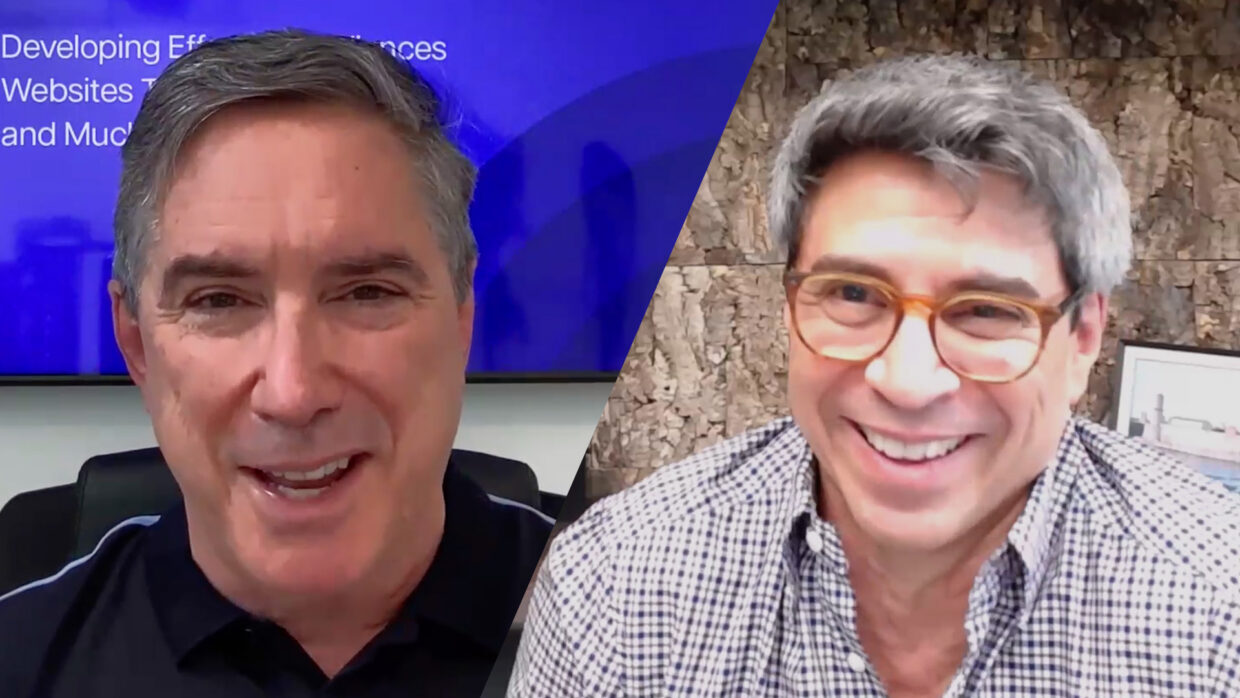
In this conversation, Ted joins automotive marketing expert Brian Pasch to explore how digital communication, AI, trust, and human connection are reshaping the dealership customer experience and why dealerships that rely too heavily on automation may be unintentionally weakening customer relationships before the sales process even begins.
Today’s automotive shoppers complete most of their vehicle research online long before they ever walk into a showroom. They compare vehicles, read reviews, ask AI tools questions, evaluate dealerships, and narrow their choices independently. By the time they reach out, many buyers are already deep into the decision-making process.
That means the first real sales interaction no longer starts on the showroom floor. It starts online.
Ted and Brian discuss why this shift is fundamentally changing automotive retail and why dealerships must rethink their approach to live chat, digital communication, customer engagement, and AI-powered dealership technology.
While AI can improve speed and efficiency, the conversation explores why technology alone still struggles to create the empathy, trust, confidence, and emotional connection that influence buying decisions and drive higher conversion rates.
In this episode, you’ll learn:
- Why the “first digital handshake” now happens online
- How modern car buyers research dealerships before making contact
- The difference between answering questions and building sales conversations
- Why trust and emotional connection still influence automotive purchase decisions
- How AI can support dealership communication without replacing human engagement
- Why dealerships focused only on efficiency may be missing high-value opportunities
- How stronger digital conversations can improve lead quality, appointments, and sales conversions
- What dealerships should consider when evaluating AI tools and customer communication platforms
Ted and Brian also challenge the growing assumption that AI-driven customer communication is automatically more effective or less expensive. Instead, they explain why dealerships should evaluate technology based on its ability to strengthen customer relationships, improve engagement, increase conversion rates, and move shoppers further down the sales funnel.
The future of automotive retail is not about choosing between AI and people. It is about using technology to create better, more meaningful human interactions.
Watch the full conversation to learn why dealerships that prioritize trust, authentic communication, and human connection will continue to stand out in an increasingly digital automotive marketplace.
Hi, this is Brian Pasch. Welcome to another exciting podcast interview. I'm with Ted Rubin today, and we're getting pumped for the DMSC conference coming up in Scottsdale. And today with all the buzz about AI. AI didn't say AI that I want to come back. To really the OG of Customer Communications. TED and Active Engage have really excelled at one thing that's helping dealers sell more car in service. And we wanna see how the current overlay of AI should be doing. Most of the communication really works in the real world. Ted, welcome to the show. Thanks so much for having me back. Brian, Ted, let's get right into it. I don't mind controversy. Uh, I remember my mother saying, um, you only have one chance to make a first impression when we talk about that first digital handshake. Someone comes to the dealer's website, they have a question, and they decide to reach out today. Um. Dealers are trying to figure out is the best thing, AI, am I saving money with AI? Um, I can't answer the phone myself. Should I be using a company like Active Engage? Is it a hybrid approach? Um, let's talk about the first thing. What does your research show about that first digital handshake and. What's the impact of that not going well for the consumer's intent and interest at that moment?
Well, I mean, the first digital handshake is really the first handshake that you're getting today, right? Uh, the, the entire idea of. Having someone come into the dealership and be the basis for the relationship that you're gonna have has really shifted so much earlier. It's now really that interaction is happening live, you know, with the customer on the web when they're going and they're visiting your dealership. That's the same sort of point in the sales funnel that used to be at the store is now there, and it's realizing that that's, that's where that's moved to. It's moved. So that the customer isn't there, just like we have people that work remotely today and, uh, they interact and buy things remotely and stuff like that. Well, finalizing, completing the car sale still is massively happening in store. Correct. That first interaction where you start to really rely on the dealers happening in store. So I would tell you. And I've said this before, you know, if you're not having kiosk and automatons that are interacting with customers at your store, I don't know why you would do that on the web. Um, and not that there's not value to supplying data and, and even using some sort of AI, you know, on your website or, or in your service. But when you're interacting with customers for that first handshake where you're actually looking, where they're looking to communicate with you. Then they're looking for that interaction that they used to get in the store. They've just moved it online. That's right. And so, you know, 81% of buyers, according to a Harvard study, say that trust is the number one factor. And so that's an interpersonal interaction that's required to get trust. They're not getting trust because. If the computer is telling them they're not getting trust through the situation, just because there's something even printed on the website, the trust is an emotional. Impact on the customer, right? So you have to gain the customer's trust. So how are you gonna do that? You're gonna do that through showing who you are, showing your interest in the customer, paying attention, active listening. You know, it is also supplying data and answers, but that's not the only thing. That's just a factor.
And so I think that the way that, um, different types of tools can help supply a user. An agent, um, whether it's in store or contracted, to gain the customer's trust through that interaction. That's really what you're trying to accomplish, and that is exactly what you were trying to accomplish in the store as well. It's just that, that, that interaction is moved up because they can accomplish so much of it. Now, just like, you know, we're in two different states and we're talking here. It would be an odd or a different conversation if you were having this exact conversation with something that was supplying the data, but there was no impact from our intonation, the way that we're interacting and things like that. So, you know, Ted, I'm thinking, you know, I was just looking at some of my notes and I think that most of us have played with the chat, GPT or you know, uh, Gemini or something, and we know that. It takes a while to ask the right question to get exactly what you want. And I don't think when I do these things that I trust, anything that comes, I'm carefully looking at, you know, what this response was and if you've ever tried to generate artwork or videos, it's like, what a painful thing. I'm trying to communicate really what I want. Right. It's, it's hard. Um, I also think that. AI on a website could be very useful for me if I said, look, I'm looking for a white wagoner, um, with these features, and I just type that in and it gives me a list of cars. Okay. That's like a simple thing helping me.
But when it comes down to me deciding whether I do this business with the dealership, I think I want to talk to real person . I could even say, look, if I knew I had a B one oil change on my, you know, Mercedes. And I just needed a time I could do that through an agent because I don't, I don't really wanna talk to anybody. I'm about afraid they're gonna upsell me and I could do that. But when it comes to a car, what's my car worth? What's your process? I was struck by your trusting and I, and I'm not getting trust from any of these, you know, AI agents. Is that, is that the big piece we missed? Separating utility from the sales process. Like there's two separate things. Are we trying to make AI do something that really, in the current iteration, we're way far, far away from? Well, I mean. I think that, that you're on the right track for that. I, there you have to understand what you're trying to accomplish and I think that's what what everybody needs to look at. If you're a dealer, you need to be saying, okay, I'm having this first interaction, or I'm having an interaction with the customer. Is that a sales interaction? Is that a customer service interaction? Do I have an opportunity to sell there or is this just a, if it's purely customer service, I still wanna have some level of. Community, some level of emotional impact. 'cause I want them to know that I care. But if I'm just supplying data, like I use, I use AI probably daily for different things. And we supply AI, right? So it's part of our suite of products. And what you were talking about before in asking questions is called prompt engineering. So we're trying to, and everybody who's using AI and supplying it to the public. Is trying to figure out how to programmatically take all the different ways that you would ask a question and normalize that in a way that the models will understand it so that it supplies the most reliable answer back. But all of that is like, is like a search engine. So when I go through searching for Google, searching for things on Google or Gemini, or if I'm looking at things in Google AI, then I'm just looking for facts. I'm just looking for a factor. I'm looking for a task. I want something to be accomplished. I'm telling it to go out and do research for me. I'm telling it to go out and uh, find things for me. And if that's what you're using AI for, then it's great. And I know a lot of people look at it and go, well, does this car have these features? AI's terrific at that actually. Right? It can go out and gather that information, but that's not really what's going on. By the time that they're communicating with you, if they're clicking to, if they're clicking to search, for sure, just like you said, it's great for search, but if they're saying, Hey, I wanna have a conversation, they don't wanna have a conversation with a computer because the computer is not gonna have an interactive. Emotional conversation with them, where I'm gonna impact your perception of the dealership. I'm gonna impact your perception of me. I'm trying to sell you myself and let you know that, right. I'm gonna work for you and you can rely on me. So, so does that come into this element of authority? Like, like if you were selling to me and you worked at the dealership, you can show your experience. That's right. Your care, your knowledge of the product, you know, common issues with the product. Right. So. I don't think anybody has thought about it.
The best salespeople in your dealership evoke a sense of authority. They, they, they produce confidence in the customer, right? So they have some confidence that they have there, but they're also drawing the customer. When I was running stores. The best salespeople were the ones who could really like, connect with the customer or they drew the customer to them, right? And they, the customer, would like hang on their words. Like they would be so interested. What do you think? Which do you think is the better car? What are you interested in? They don't do that with computers, you know, they're not gonna do that with AI. And I do love AI for a lot of things, and I think it's useful for our industry and, and for other areas, but. It's just going to give you the flat. That's the answer. It's not gonna sell you anything. Because it, it's not set up for that. That's not the kind of capability that it has. It has the ability to supply you with data. So it's great if it supplies me as an agent with data or a salesperson. You know, I can be the best sales pro and meet all the certifications for my manufacturer real easily if I have AI behind me. 'cause I have all of it feeding me. But that's not gonna help me sell the customer when it comes down to it, because the customer has to believe. That I'm gonna do the best deal for them. The customer has to believe that I'm looking out for their best interest. That's why you want to use me as your sales person at the store. So, so Ted, would you say that, could we be getting to a point where the average consumer. It feels pretty comfortable of researching now online and these tools are even making it easier. And I will say one thing for research. Yeah. You know, I have a rental home in Italy and it's in a Teleco tu Chino, and I asked Cha, GBT, you know, what's the best short term rental home and tu Chino based on customer for sure. It picked my spot, you know, which I was happy, but it listed all the great things that people wrote. Like, that's super, that's fantastic. Right. Well, could we, could we be encouraging dealers today is that if the consumers are the most informed, they have every fact on their fingertips feature and stuff, that the thing that they're really missing is that. That first digital handshake is still cold. It's missing emotion, it's missing authority. It's missing advice. I mean, I work with dealers all day long . They look at their reports and they call me up and say, Brian, what do you think about this? Right? Because what are they looking for? They're. The data's there. They're not sure if the data they're interpreting is right. They need an expert to confirm. You, you with me? And so should we be talking to dealers differently? Like, guys, all the data's out there, all the search tools are out there.
When they come to your website, man, give them a human because it may be the only thing left that. Is between them and a purchase, which is great choice, or have you considered this or you are, are we, are we like missing this and just rushing into a more sterile, factual workflow? Is is, is that why dealers may be missing so many more additional sales? Yeah. I, I think they, they want. I think they wanna, I think there's a lot of dealers who wanna take advantage, advantage of technology and I think that, you know, that's, that's, you know, we've lived through a lot of eras where they didn't do it right away. And so they, they have a little bit of fomo. They don't wanna miss technology and things like that, but exactly to the thing that you just said about how dealers call you. So they could go online and they can go to Jack, GPT or any of those services. And it'll give them an evaluation that will be similar probably to what you would say, but it doesn't have your impression. So they're getting something else from you that's part of who you are and your humanity. That is a perception that they believe in. So you're supplying a service to them that they believe in you. So they're literally reaching out to you live rather than just feeding the data into something else. Correct. It's the exact. Same thing. The reason that you call it a handshake and the people say it's pressing flesh. Right? Well, that's to have that connection. So if you're not creating the connection, then you're not satisfying that need to find trust and you're not satisfying. The emotional desire to want to connect so that I believe you, like I'm reaching out 'cause I'm saying I wanna believe that you can do what I need you to do for me at the dealership. Are you that kind of dealership the thing about what is available online? Absolutely.
You can go online and, and, and it's really happening. Like you have to move the whole thing kind of forward a little bit. Because what's happening is they used to go. To the dealership, that would be the first connection. Where you're really connecting and you'd have data supplied there and things like that as well. And you know, they would do research, you know, some basic research online and even maybe on your inventory. What's really happening now is I'm just going to Google, or I'm going to Gemini or chat GPT or whatever service that I'm using, and I can ask it every single question about every single feature or function that I want on any card that I want. It'll not only summarize and give me the answers directly. Verbally that I'm looking for, but it'll also show me the website so I can verify what it is that's there. And I'm interacting with other sites, social sites, to get endorsements from other people. There's some emotional impact on what that is. By the time that they get to the website, now they're down to, okay, I just want some basic information about inventory. I want to kind of see what's going on. And if. You gotta remember, not everybody is clicking to engage. So if they engage at that point, I can assure you, and there's lots of statistics to prove that it has zero to do with the data, that the reason they're connecting at that point, you know, it's a fraction of the people that are going to the website, but the reason they're connecting is for that impact, for that trust, for that perception of who you are as a dealership for that belief that. You're gonna satisfy me and I'm gonna have my, and not only my questions answered, but I'm gonna get an impression from you that's gonna go, you know what? I like that guy. I'm not gonna go, I like the, the AI that answered questions for me on your website. I like that guy. I feel like he's gonna help me when I come into the store. He's been easier to deal with or nicer to me than other ones that I've dealt with before. It's more similar, that handshake to a phone call. That interaction through communication online than it is to email, which is, you know, much more technical and much more static and more formulaic, you know, in the way that it is.
So if you're not gonna capture those moments, then you're missing opportunities. Just like someone who walks into the store and you go, you know what? I don't have anybody to talk to you right now. Go over that kiosk and it'll answer a bunch of questions for you, and I'll be there in a little bit. That's what you're getting. You're basically pushing the customer off and going, I'll give you as much data as you want, but that's not a data play. Not at that point. Alright, so Ted, let's take this one step further. Let's say the dealers listening in today say, you know, maybe we've taken it a little too far. Um, I can see AI for helping them answer questions about vehicles, even searching, narrowing down the inventory. They, they have no shortage of data, but. Then when they reach out, we, we kind of penalize them. So dealers were sold a lot of the AI tools because they said it's gonna save you money. And you'll have 24 7 coverage, right? So can we break this out into two areas? Let's talk about the save money, because I'm sure you've done some testing where dealers were just using AI and you, you know, you're putting humans in there. So saving money really is, well, are you losing conversions or opportunities? And then the 24 7. Of course your team outsources 24 7. That's not the problem. So what's the truth then? Let's say 24 7 is a joke because they know they really could get 24 7, so, so let's just say from you, dealer says, Ted, I think it's cheap. What would you tell that dealer who's thinking that? An AI agent is cheaper at, well, you know, whatever, uh, they're charging me 4 99 a month to put something on my website. Uh, it doesn't have to be a real person. I mean, you know, we, we know who our competitors are and, and, and, and some of them, you know, if they're, uh, most of the AI services are not through certification programs at this time. They haven't gotten that for yet, but the ones, there's a couple that are, and the pricing is the same or more. You know, than what you're paying with us. So just at a pure cost standpoint, forget ROI. There, there's no discounts in what that is. Um, and if you read the news or look at anything that has to do with AI about buying the services, then those prices are gonna go up. You know, they're gonna escalate at a faster rate than they are for, for pe, you know, just general people and what the services are for what that is. Now, you know, if you're buying multiple service, just like if you're buying multiple services from us, then you can bundle things and they can, you know, we can make certain things look like they're better or cheaper, but I mean, if it's just. Website messaging versus website messaging. Then you know, then they're either competitive or more than. The average programs that are out there for me and even our competitors, you know, for whatever they may be. So I don't, I think it's just a misconception that it's less expensive. It really isn't. I think that a lot of people that go that way have had inequitable relationships with maybe some bad, uh, messaging providers in the past. And so they have 24 7 or they don't know that it can be 24 7. It can be, it absolutely can be. Se we we're 24 7. We've always been 24 7, so that's not an issue. And I mean, I guess. The, the, the other thing I would kind of look at is, and I would ask you the question if you, I've always, I've, I've asked dealers this as well, which is, you know, you have a certain group of salespeople that you know, if you could replicate them and have them sit and answer phones. Or messages online, and they could do it. They're your best guys. You know that they interact, you know that they're closing deals, and you could just have them 24 7. You had enough of them where you could replicate them and they entered 24 7. Would you still go to AI? Like what would you do if you could have a live person and they were your best guys? Right versus AI. 'cause that's, that's the same AI that's out there. Then would you still use AI knowing that they can answer every question? They can be there 24 7 and if the answer is, I would still go to AI, then then you should go to AI because I don't know what the advantage is there. But that's, that's, that's for you. No. If you said, look, it's priced the same and you have a crusher, and I can replicate them, and I guess Ted, that's the missing piece. They don't understand how you retain, train and scale. Maybe that's, maybe, could it be that they have problems retaining people? Right. You know, the BDC is just like the turnstile.
So are they projecting their inability to get a quality person to communicate with a customer online and projecting? It's like if I'm having that problem. Because I'm the local dealer and everyone wants to work for me, could they be penalizing you? Well, I don't think it, I mean, we don't, I, I, I think that if, if you're, if you're comparing between AI and human services, then you have to evaluate each human service for what it is, right? So I think that they do compare AI services to live people. And if you have a company that has live people and they don't. Do a well good job or they're not well trained, then absolutely that that can be an issue and that would be something that would impact that decision for us. Um, we, you know, we've been doing this for 18 years. Um. Going on 19 years. And so, you know, our ability, and we've evolved over the time to be able to learn, we know how to hire people specifically, you know, for this industry, for this purpose. The entire idea of how we get them, you know, onboarded and through the system and get them starting chatting and the training that they go through. Conversational training, grammar training, spelling training, typing, training. You know, a lot of these things that they're hired with those things to begin with, but they need to understand how we're doing it. Um, you know, then. That's not, that's not an issue for us. We're trying to make sure that we're taking advantage of the best conversations to be able to have them in the best way to represent the dealer in the best way. So, yeah, you know, if you, if I, when I was in stores and know I would go screaming around about the way they handled phone calls and I couldn't get my guys to do it. Then there wasn't really a viable way to be able to hand that real time conversation before, so you would just continue to scream at people until they did it the right way. There were a few guys where you'd limit it, right? You'd go, you three guys, you're taking all the phone calls from now on. This is what's gonna happen here. Or I set up A, B, D, C and I would train them, or someone would train them to be able to do it. And that's the only people that took phone calls. Well, that's what we're doing here. You know, for us that's what we're doing is we're saying, look, this, this one vehicle, this one medium of communication that that is out there, that's the only thing that we're gonna do. We're gonna focus on how to evolve that the best. Frankly, we use AI to look at a lot of. The conversations that we've had and how they matriculate to learn what the most effective ways are to be able to have these conversations on an ongoing basis to be able to be super effective at doing that.
But you know, that's what it really comes down to. Uh, I think that it shouldn't matter whether it's AI or live people or, or which company it is. Uh, uh, as far as long as it's being effective for you, you should be looking at the ROI on what you're doing. You should be looking at. You should be looking at how many of your conversations are turning into closed deals. 'cause leads are not that hard to produce anymore, right? Almost anybody. There's so little privacy that anybody, I, I was reading the other day that on LinkedIn that when you send a link, if you wanna just connect to somebody and they don't know you, that you're better off not sending a message. They're more likely to accept it if you don't send a message. Well, that's an interesting philosophy that, right, right, right. People are more, but they're, that means that they're more willing to give up this information. So get producing leads is not the most important thing. 'cause you're gonna get 'em either way. So I'm not saying it's not good to have leads, I'm saying that you're gonna get the leads. What's important is matriculating this customer further down the funnel so that they're closer to the sale and that the people when they come into the store, it's easier for your salespeople to close the deal. You wanna get more sales. Out of the leads you want, you wanna have to burn through fewer leads to get to a sale. And so that's all about that conversation. That's all about that early conversation when they first engage online. 'cause that's what they're looking for at that point. The research, you know, getting online and going, yeah, you can get a third row and this is what the curb weight is and this is what the zero to that's, they may take it and that could even be part of the question, but that's not their evaluation point. At that moment with their evaluating issue. Yeah. When I think of like our agency selling digital marketing, dealers know how much approximately packages are. They understand it, but they wanna know, are you gonna take care of me? Are you gonna put a good person on the account? That's it. Right? Yeah. And, and it's, and it's refreshing to, in, in, in, and even the AI work that I'm doing. And having some fun with it. I, I still understand that, um, people want to talk to me and they wanna know everything's gonna be okay and they want a trusted path forward. And what I think of the best car salesman I've dealt with is it wasn't that I didn't know about cars or dealers, right? I just wanted to know. Are you gonna do the right thing for me? Right. And, and I think I haven't seen any AI workflows or thing that would give me the impression that that would work as much as, uh, a trained staff person, um, a real person chatting with me, uh, because I can tell the difference between when a person is real and not. And I think most people can still today. Right?
It changes the whole relationship. I, I completely agree. Listen, I, I, you know, I've been in the business for a really long time, close to 30 years, or 30 years or so, and I've met a lot of unbelievable salespeople, really exceptional salespeople, um, and a lot, when I say a lot, I'm saying, you know, I've met 20 or 30 that I think are just spectacularly, uh, great salespeople. And every single one of them is. We've learned from because they, they're much more about the personal connection. They're much more about the service to the customer and developing trust with the customer so that the customer just relies on them. That they just rely on that person, that what they say is true. It's gonna happen if it doesn't. Happen exactly the way they're saying is gonna happen. They know that that person is gonna solve problems for them, take care of them in the long run, be there for the next sale, be there if there's issues relative to getting the car serviced or dealing with financial problems or whatever may come down the pike. For them, they're like, I have that person to deal with. I have that person because that's who I relied on to be able to get this done. That is the most motivating factor according to numerous studies. That have been done is that particular asset, right? There is trust and belief in the person who your salesperson is, who's representing the company that you're buying from. And so if you eliminate that person, then you're eliminating the ability to build that kind of relationship with the customer, and you're just relying on data and you're saying, look, I'll supply you with all the data that you want, but. You know, it's a different, you're building a different relationship for a different purpose. And so, you know, if all you're doing is customer service and all you're doing is trying to say, look, you have questions, I'm gonna give you answers, and I'm gonna give you those answers, and you can leave and you can go to another dealership, or you can do anything that you want because all I'm capable of doing is giving you answers to your questions. Then you can supply that with. AI or with bad people or you know, with people who aren't trained in conversational contact. But if you're trying to develop sales, develop customers to evolve them and mature them through the sales funnel so that they are closer and closer to the sales. So by the time they actually walk into the store, that's a deal for you to lose. Like it's no longer, that's not an up Right. You know, that's not a lead, that's that customer is gonna buy. Right. So at that point. You know, that's what you're trying to be able to get to. That's the ROI that you're looking for, and that is gonna take. Building a connection and I just, you know, in our opinion, even for our AI suite and everything, we have a receptionist, but it's designed to start interacting and answering questions and then to get you to a live person as quickly as it can, right? Even though it can answer, you know, lots of questions, but you want to develop that relationship. You wanna engage and you have specific things about your dealership and specific assets that you want. Whoever's representing you or whatever's representing you to bring to light and filter those into the conversation so that you're building trust not only with you, but with the dealership at the same time through you. And there's a real live connection between you and the customer, and I just don't, I personally don't know of another way to do it. Right. Well, Ted, I'm really glad that we reconnected because. Everyone's like kind of, uh, I think AI on the brain and, uh, LLM Fever. So, you know, this is a refreshing conversation because at the Digital Marketing Strategies Conference coming up, uh, April 26th, seventh, and eighth and Scottsdale, we're gonna be talking about this balance because at the end of the day, dealers need to do more with the traffic that comes to their website. They don't. Have the ability with so much inventory on the ground just to spend, spend, spend, they're looking to turn right. They think about the average dealer's website, 20, 30, 40, even 50,000 sessions a month. Then you wonder why you're not getting more conversions. Um, maybe it's time just to sit down with Ted at the conference. It's gonna be delivering an important message. The challenge us to really rethink what is the purpose of our website? What are we trying to accomplish, and how do we best serve the needs of consumers? Differentiating between sales conversations and informational conversations I think is one of the things we want to do.
If you haven't signed up for the Digital Marketing Strategies Conference. Only dealer tickets and OEM tickets are available, so go to digital marketing strategies.org and get your tickets. We are excited about the content, the leaders that are there. And, uh, Ted, thanks for supporting dealer education as well. No, I'm, I'm thrilled to do it. I think that, uh, you try to get as much information as you can from all the different sources, and I think that this event is gonna be a great event to be able to gather a lot of intel. So dealers who are looking to really refine their tech stack challenge, herd mentality to really find what's working perfectly for their town, their website, their brand. I want to encourage you to come to DMSC. Ted, thanks for your time. I wanna thank everyone who's listening in. You should know that there's other podcast interviews with great leaders like Ted Rubin. And, uh, just go and search for the Brian P podcast and while you're in your car or, um, having a little. Time for yourself to stay up on industry trends. Make sure you listen to the other episodes as we lead up to DMSC. So thanks for listening in, Ted. Can't wait to see you in Arizona. And to everyone close out the day strong. Have a great day.